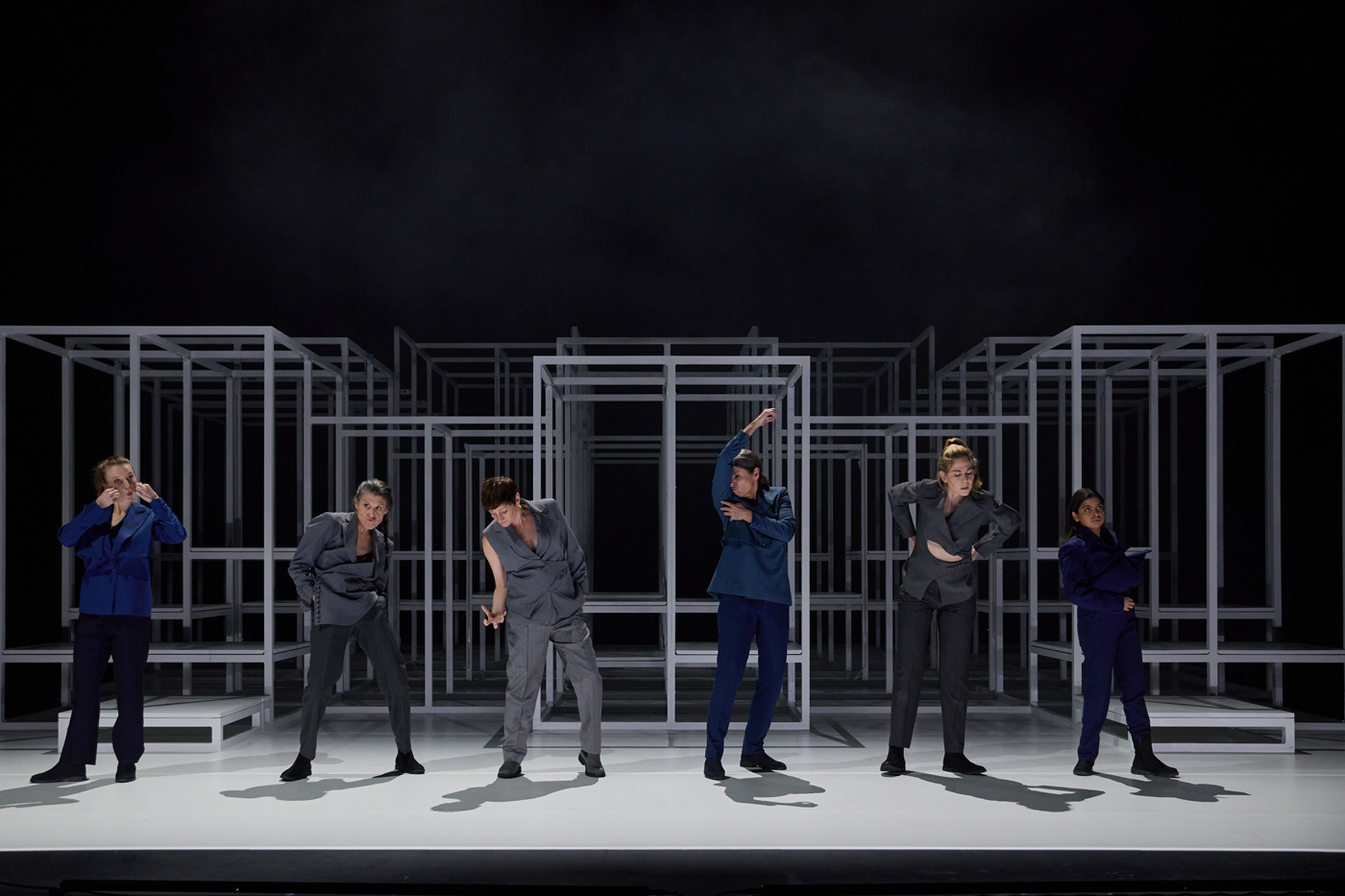
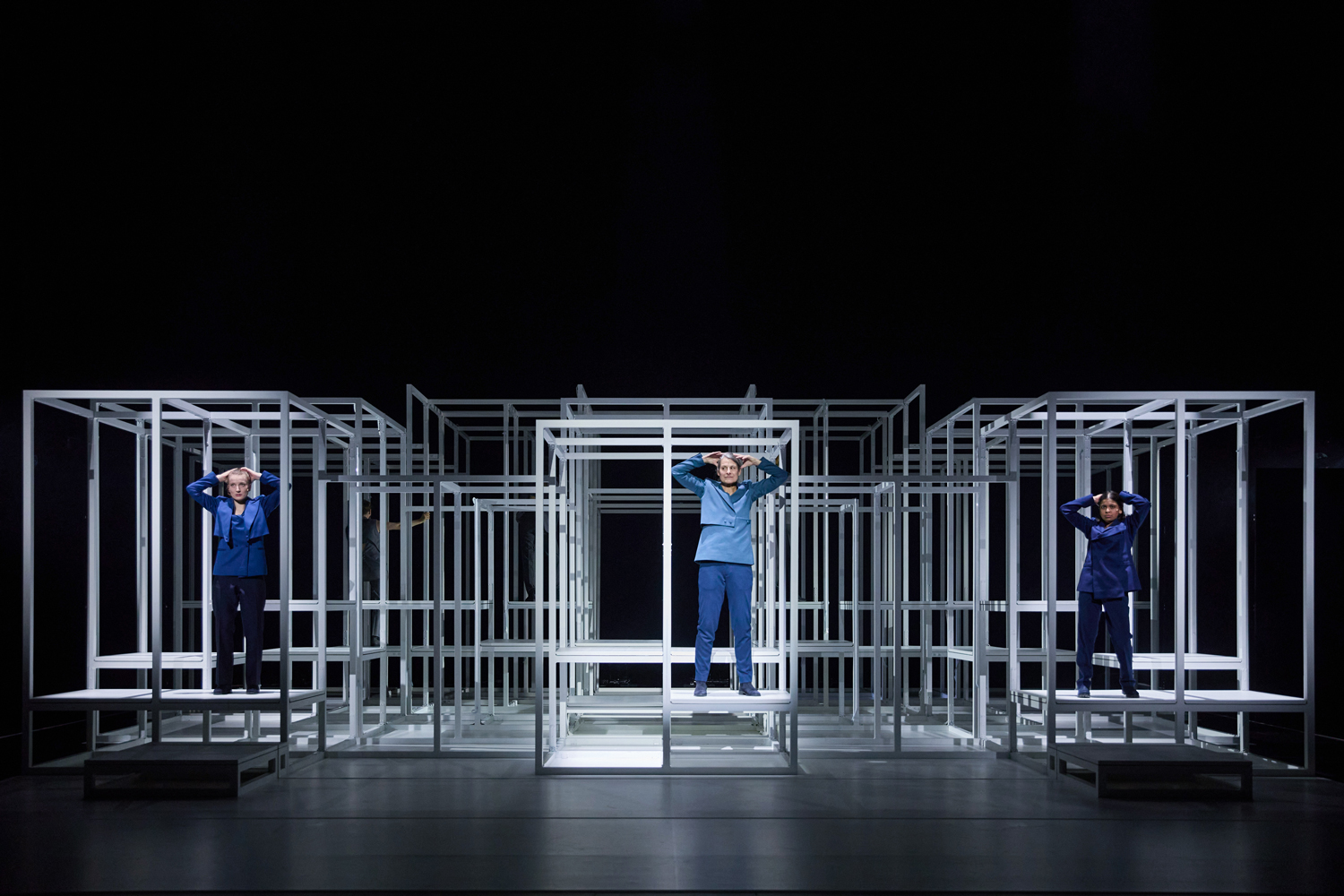
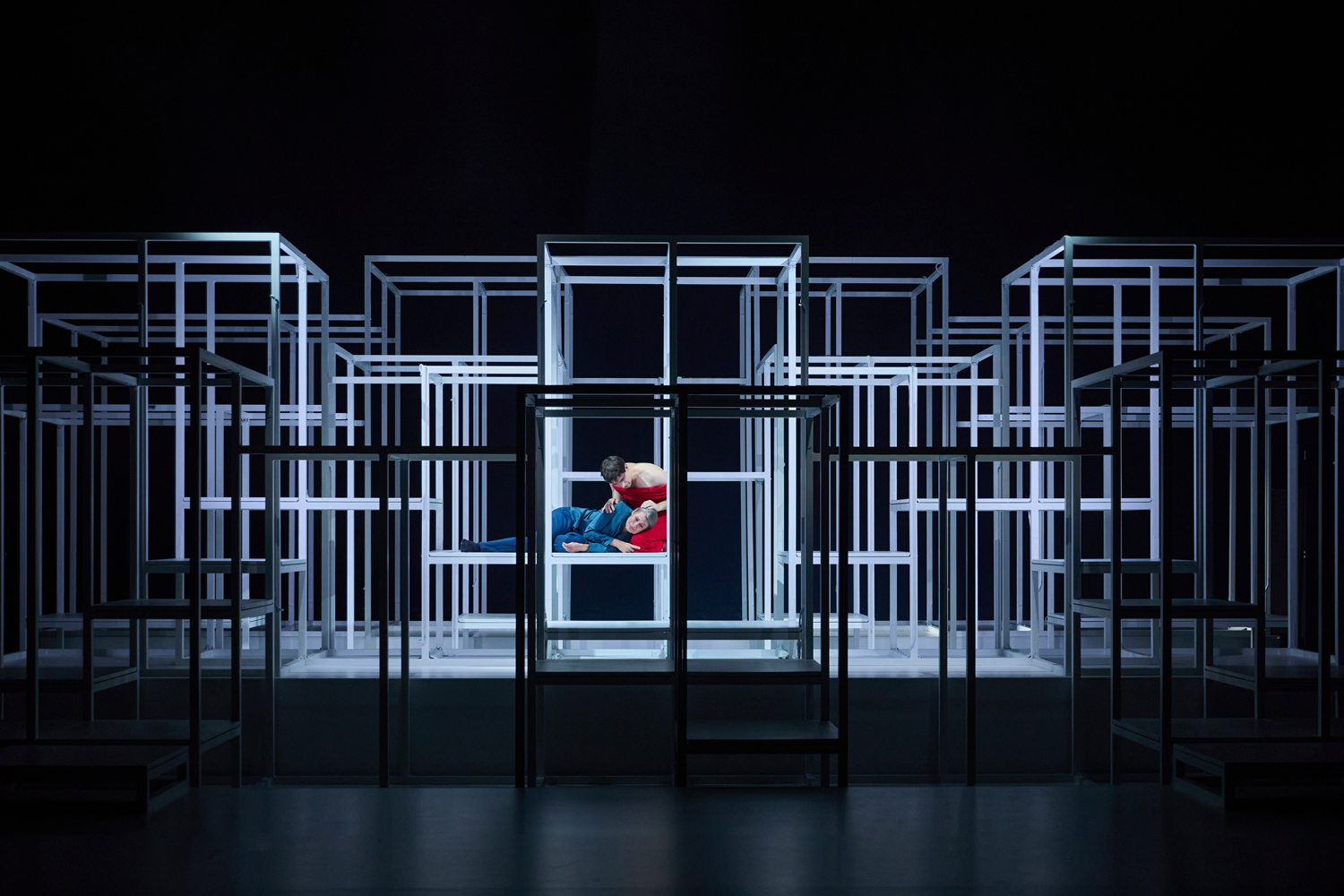
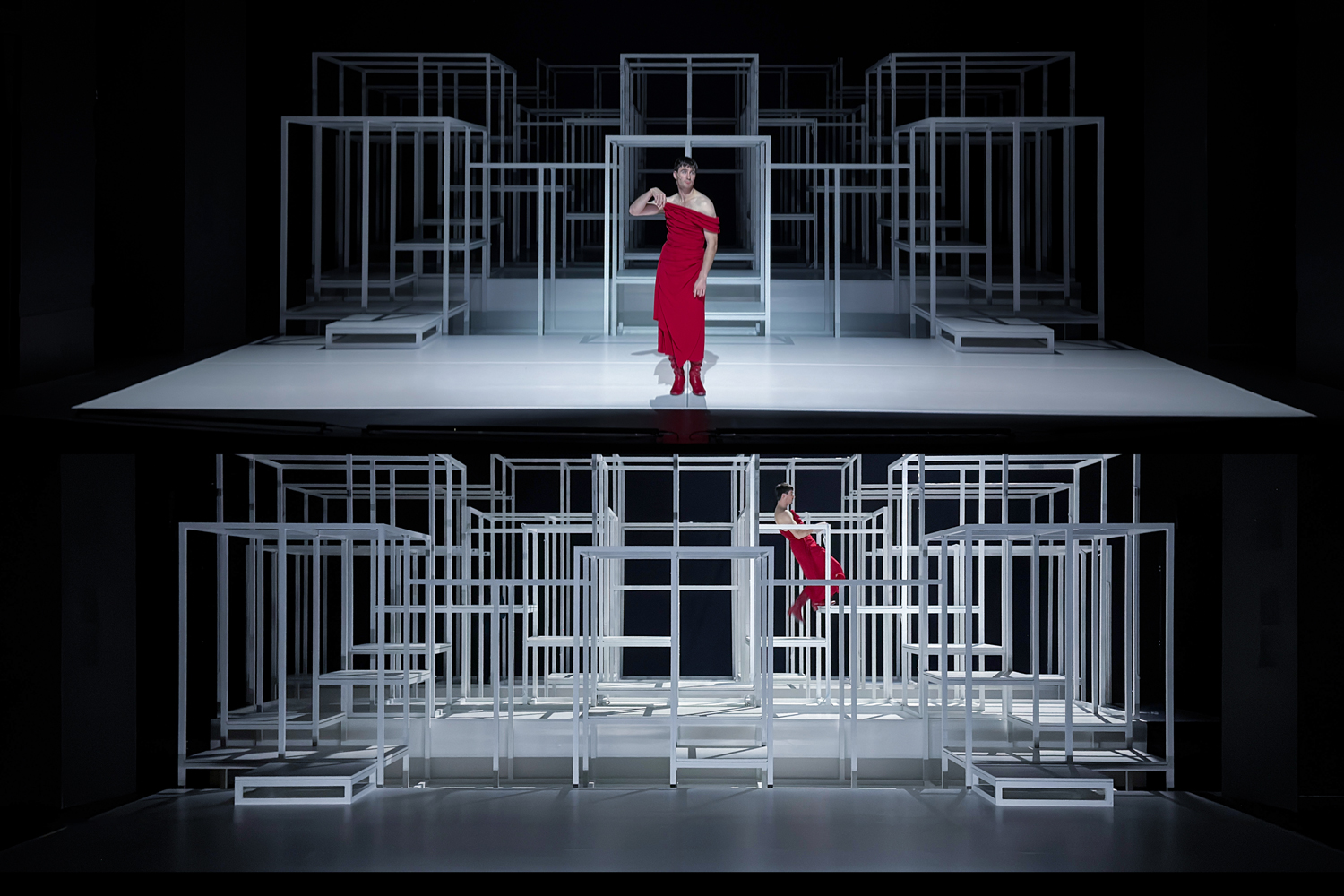
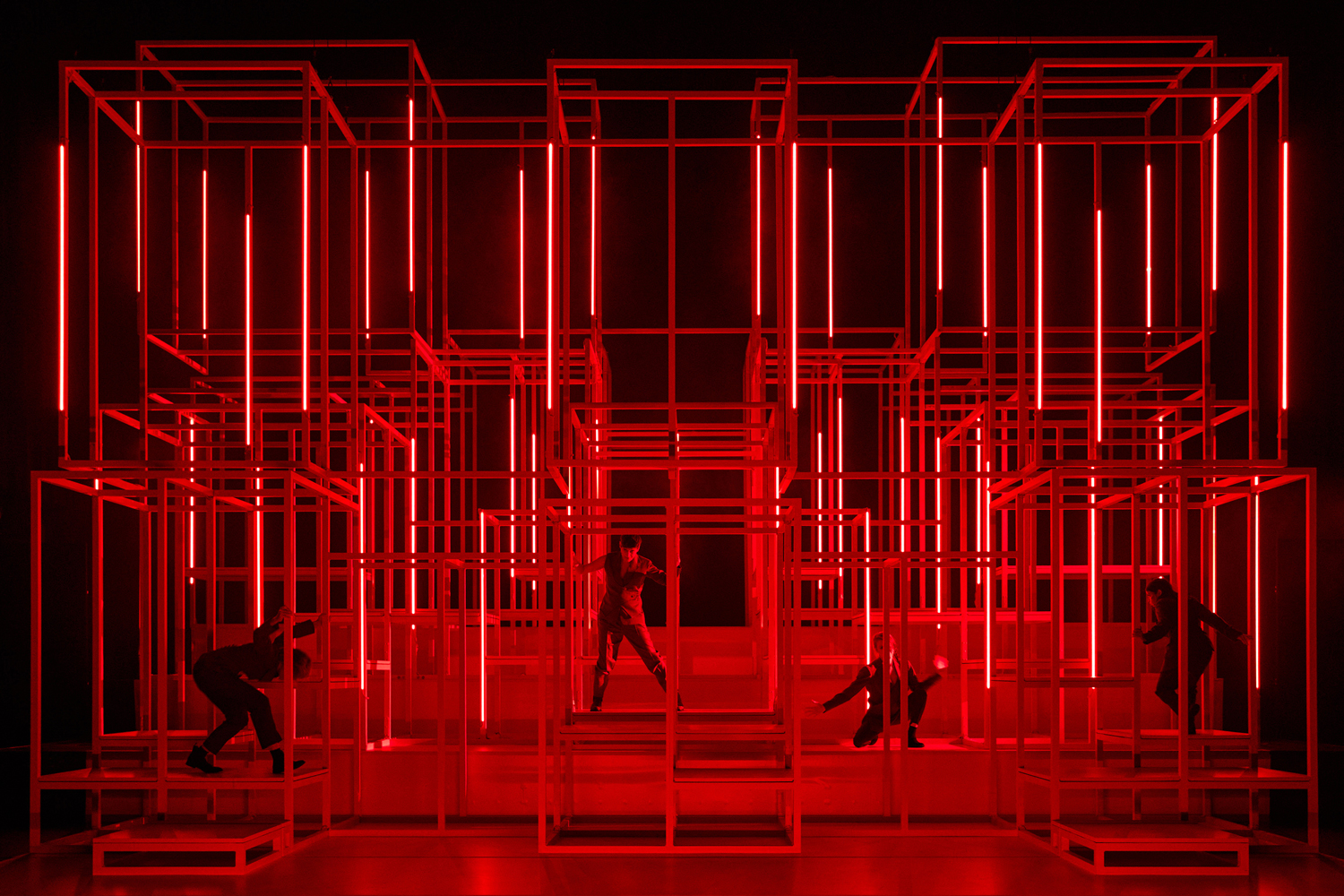
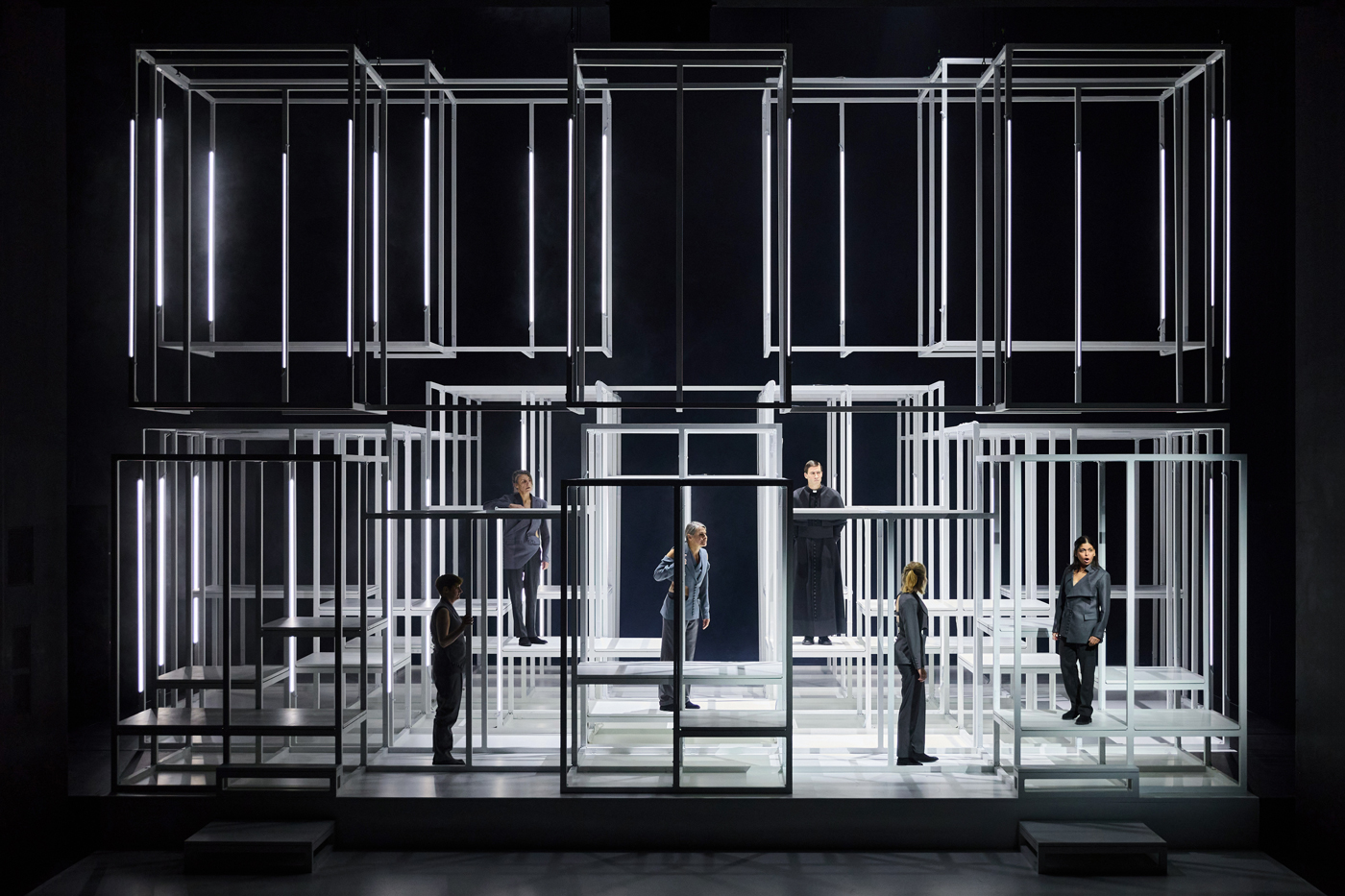
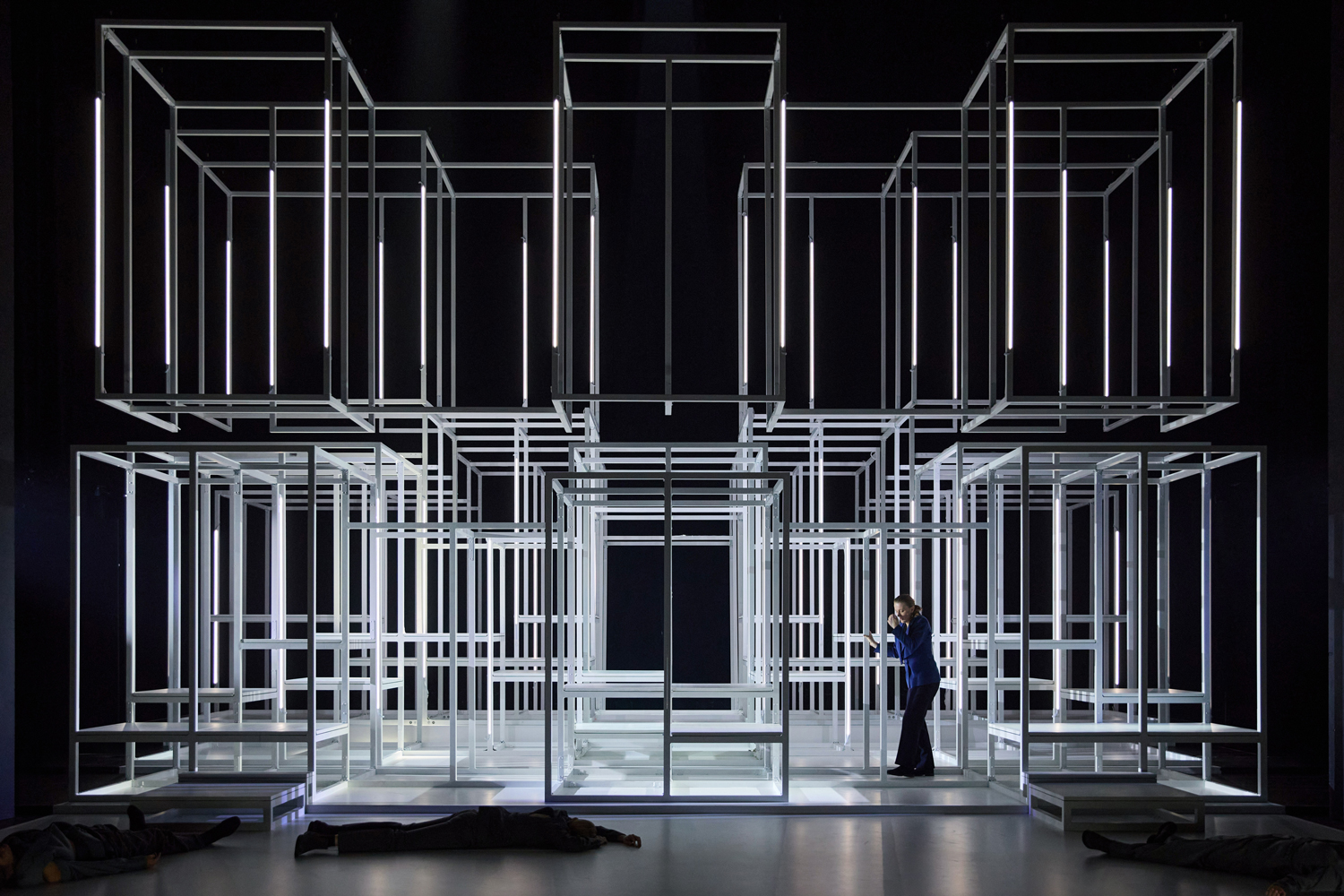
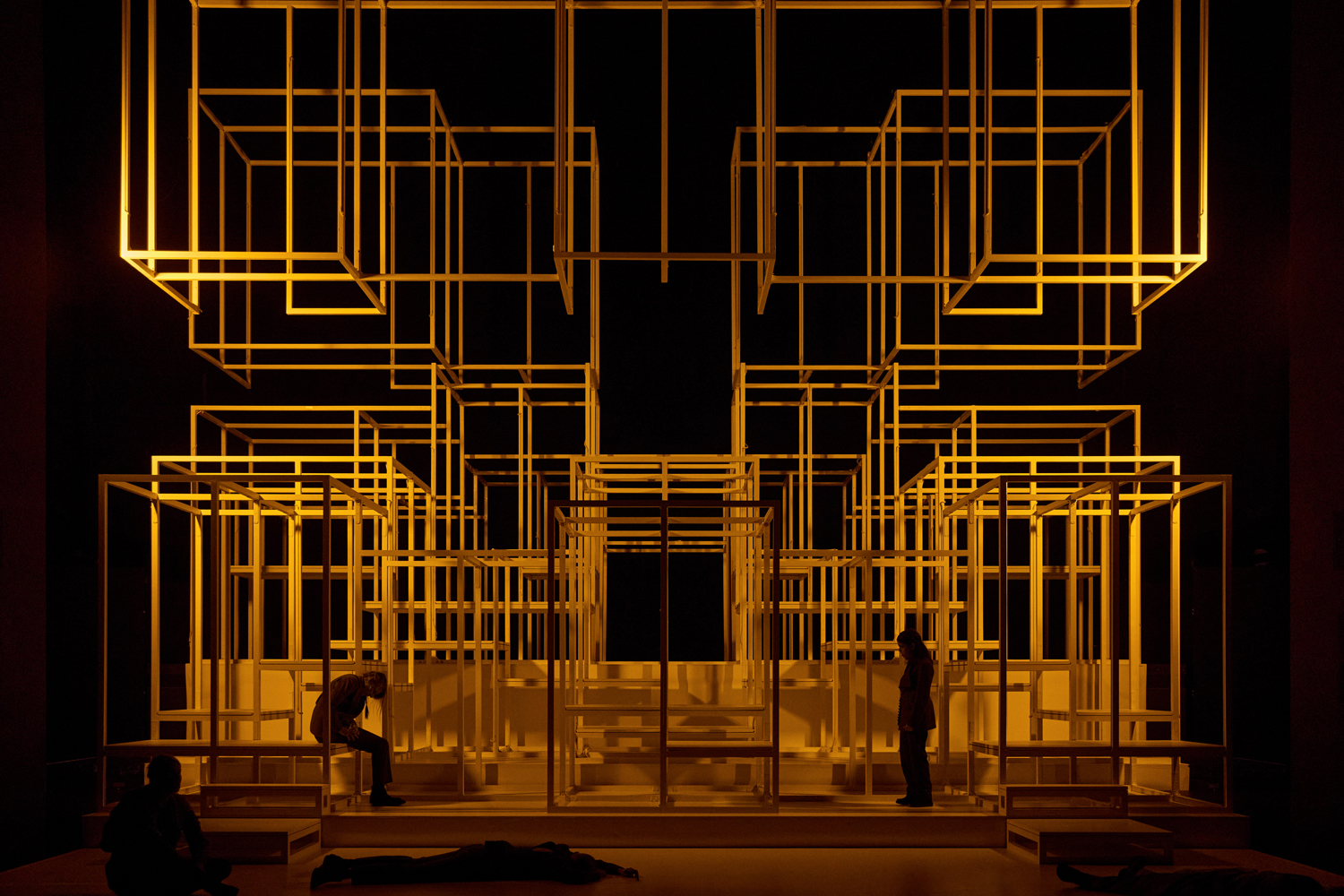
Fassung und Konzept: Ebru Tartıcı Borchers/ Fassung und Regie: Jana Vetten/ Bühne, Kostüme: Sam Beklik/ Dramaturgie: Sabrina Bohl/ Musik: Dani Catalán/ Choreografie: Azahara Sanz Jara/ Licht: Jan Hördemann/ Ton: Christian Friedrich/ Regieassistenz, Abendspielleitung: Therese von Aretin, Emma Kappl (Vorproben)/ Inspizienz: Bernd Schramm/ Soufflage: Beatrice Zuber/ Bühnenbildassistenz: Sangyeon Lee/ Kostümassistenz: Silvana Crema, Linda Siegismund (Vorproben)/ Regiehospitanz: Kristin Kukla/ Bühnenbildhospitanz: Karai Schlaffke (Vorproben)/ Dramaturgiehospitanz: Sophia Kurz/ Freiwilliges kulturelles Jahr: Dana Herrmann
Karl Moor: Valentina Schüler/ Franz Moor: Marie Dziomber/ Regierender Graf von Moor, Razmann: Marion Bordat/ Amalia von Edelreich, Pater: Luca Rosendahl/ Spiegelberg, Hermann: Julia Bartolome/ Schweizer, Daniel: Stephanie Leue/ Roller, Kosinsky: Gaia Vogel
Technischer Direktor: H.-Peter Gormanns / Referentin des Technischen Direktors: Henriette Barniske / Werkstättenleiter: Hubert Schneider / Konstrukteur: Domenik Krischke / Bühne: Florian Steinmann (Technischer Leiter), Stefan Joksch (Bühneninspektor) / Bernd Wagner (Bühnenmeister) / Beleuchtung: Katta Lehmann (Leitung Beleuchtung Schauspiel), Jan Hördemann, Mareike Neumann, Günther Schweikart / Ton und Video: Boris Brinkmann, Vasilis Makris, Ulrich Speith, Gerald Steuler / Masken und Frisuren: Dirk Hirsch, Kathrin Bornmüller / Requisiten: Urda Staples, Felix Meyer / Kostümdirektion: Susanne Suhr / Herstellung der Dekoration: Werkstätten des Staatstheaters Nürnberg / Marco Siegmanski (Vorstand Schlosserei) / Dieter Engelhardt (Vorstand Schreinerei) / Thomas Buning (Vorstand Malsaal)
How does one compensate for a lack of communication and deep-seated hurt? For the absence of appreciation, and the feeling of not being seen for who one truly is? The brothers Karl and Franz fail in their search for individual freedom and their simultaneous longing for recognition from their dominant father—each in their own way: Franz, driven by hatred and a hunger for validation, plots against his own family, while Karl is overwhelmed by his role as the leader of a band of robbers that spirals into violence and chaos. What unites them is what remains after their disorientation: with no regard for the consequences, they lay the world to ruin. Passionate and anarchic, Schiller’s first play circles around the contradictions between morality and egocentrism, rationality and emotion, nihilism and the search for meaning within a chaotic world order. Director Jana Vetter, together with a mostly female ensemble, questions today’s pursuit of self-determination and the role of patriarchy within it. For how can men learn not to rule when the entire system is built upon domination?